
For a home you own, wired cameras are more reliable and cheaper to run. Wireless cameras suit renters and odd spots, but timber walls, concrete floors and busy streets all test their limits.
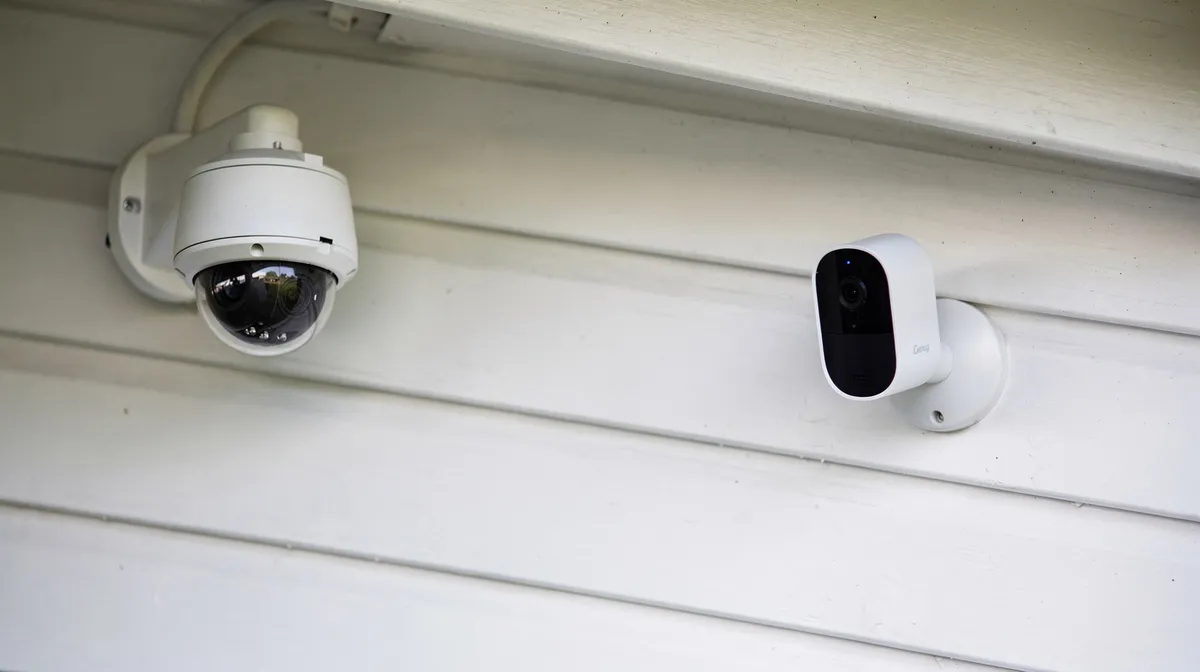
There are three types to compare. Wired PoE cameras run one Cat6 cable to a recorder that carries both power and video. Wifi cameras send video over your home wifi but still need a power point nearby. Battery cameras have no cable and record short clips when they detect movement.
Steady power and a steady connection mean the camera can record all the time at full quality. Footage goes to a drive in your home, so it keeps recording when the internet drops and there is nothing to pay each month. There are no batteries to swap and no plug packs to fail.
The work is in the installation. In a raised timber home, cable goes through a tight roof space or along the subfloor, and that takes time. It then lasts for many years.
Inside, near the router, wifi cameras behave well. Under a raised house, on a back deck or on the far side of a two storey home, the signal weakens. Concrete floors and walls in apartment buildings block it even more. A camera on a weak signal drops frames, goes offline or records nothing at the moment you need it.
Wifi cameras also need power. Outside, that often means getting an electrician to add a power point, which eats into any saving.
They go up quickly with no cable, which suits renters and short term setups. They sleep until something moves, then wake and record. That short delay often means the clip starts after the person has already appeared. On a busy street or near a footpath, constant triggering drains the battery fast.
Most wireless cameras store clips in the maker’s cloud, with a subscription for anything more than a few days. If the subscription lapses, the footage goes with it. A wired system keeps weeks of continuous footage at home.
Wired cameras can run strong infrared, colour low light sensors or lights that switch on for people. Battery cameras keep their infrared weak to save power, which limits what they see at night.
Wired for the stairs, front door, under house and back. A battery camera for one awkward spot. For renters, battery cameras or a doorbell that can move with you.
Prices for wired systems are in the cost guide.
Timber is easier on wifi than brick, but distance and the floor between levels still weaken it. Cameras under the house are often at the edge of range.
They can, but constant movement drains the battery quickly and they may miss the start of events.
Usually it is deleted or no longer accessible. A wired recorder keeps footage locally with no fee.
Yes. Wired for the main approaches and a battery camera for one spot that is hard to cable is a sensible mix.
Starting prices, what makes inner west homes cost more, and what to check in any quote.
PlanningCamera counts for raised homes, apartments and share houses, and which positions to cover first.
QueenslandThe key rules for homes, apartments, share houses and businesses. General information, not legal advice.
HiringThe questions to ask and the answers to look for, especially for older homes.
BrandsNight vision, detection, deterrence and apps compared, plus the specifications worth checking.
4K wired systems for houses on hilly inner west streets, with cable hidden in the roof or subfloor.
BusinessCamera systems for hospitality, fitness, offices and health retail, planned around how each business runs.
RepairsFault finding for any brand, and upgrades from old analogue or wifi systems.
DeterrenceCameras with strobes, a siren and two way audio that react to people, not wildlife.
Cameras and cabling in South Brisbane 4101.
4067Cameras and cabling in St Lucia 4067.
4068Cameras and cabling in Taringa 4068.
4066Cameras and cabling in Toowong 4066.
4101Cameras and cabling in West End 4101.
4102Cameras and cabling in Woolloongabba 4102.
Share a few details about the property and we will send back a written quote with every item listed.
Thanks. Richard (QLD Lic #4930731, ACMA #A058225) has your details and will look over the job, then send you a written, itemised price within 15 to 30 minutes during trade hours.